Ethiopian Orthodox Christianity
Ethiopian Orthodox Christianity is one of the oldest Christian traditions on Earth, predating most European churches by centuries. It traces its roots to the 4th century — and its legends reach back further, to King Solomon and the Queen of Sheba, to the Ark of the Covenant that Ethiopians believe rests in Axum.
The liturgy is chanted in Ge'ez, an ancient Semitic language no longer spoken in daily life but preserved in prayer. The Bible used by the Ethiopian Church includes books found in no other Christian canon. The traditions preserved here — the dancing worship, the all-night vigils, the physical devotion — represent a Christianity that much of the world has forgotten.
Faith Lived Daily
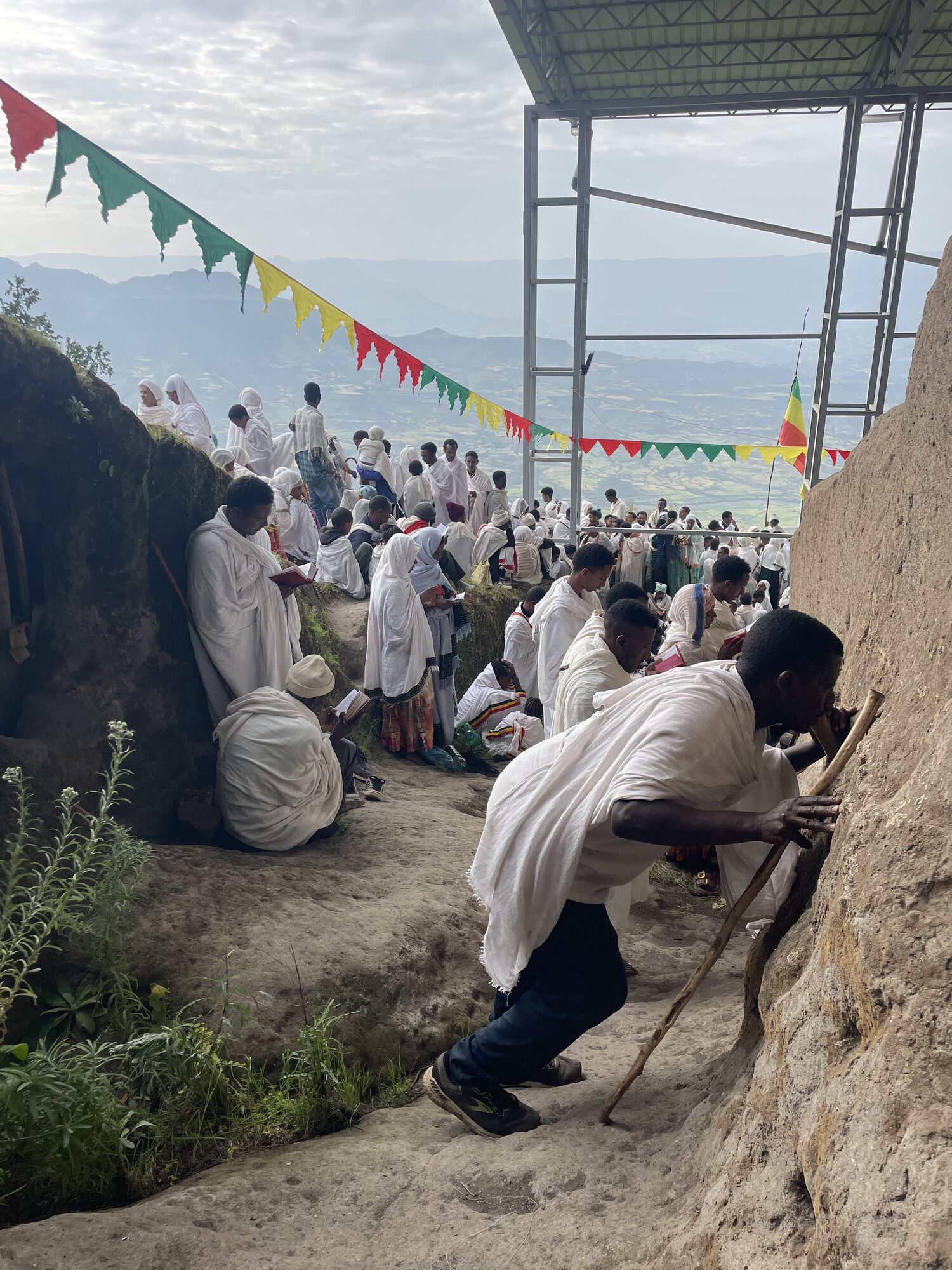
In Lalibela, faith is not abstract. It is the priest wrapped in white at dawn, walking to the church before the sun rises. It is the sound of prayer echoing through stone corridors carved eight centuries ago. It is pilgrims walking barefoot into churches that sit below the earth's surface, descending into the rock as if descending into the heart of something ancient and true.
Every morning, every evening, the churches of Lalibela fill with worship. Not for tourists. Not for ceremony. Simply because this is how life has been lived here for 800 years.
The Mysticism
According to tradition, King Lalibela received a vision from God: he was to build a New Jerusalem in the Ethiopian highlands. Angels, the legend says, worked alongside human hands to carve the churches from living rock — continuing the work at night while the laborers slept.
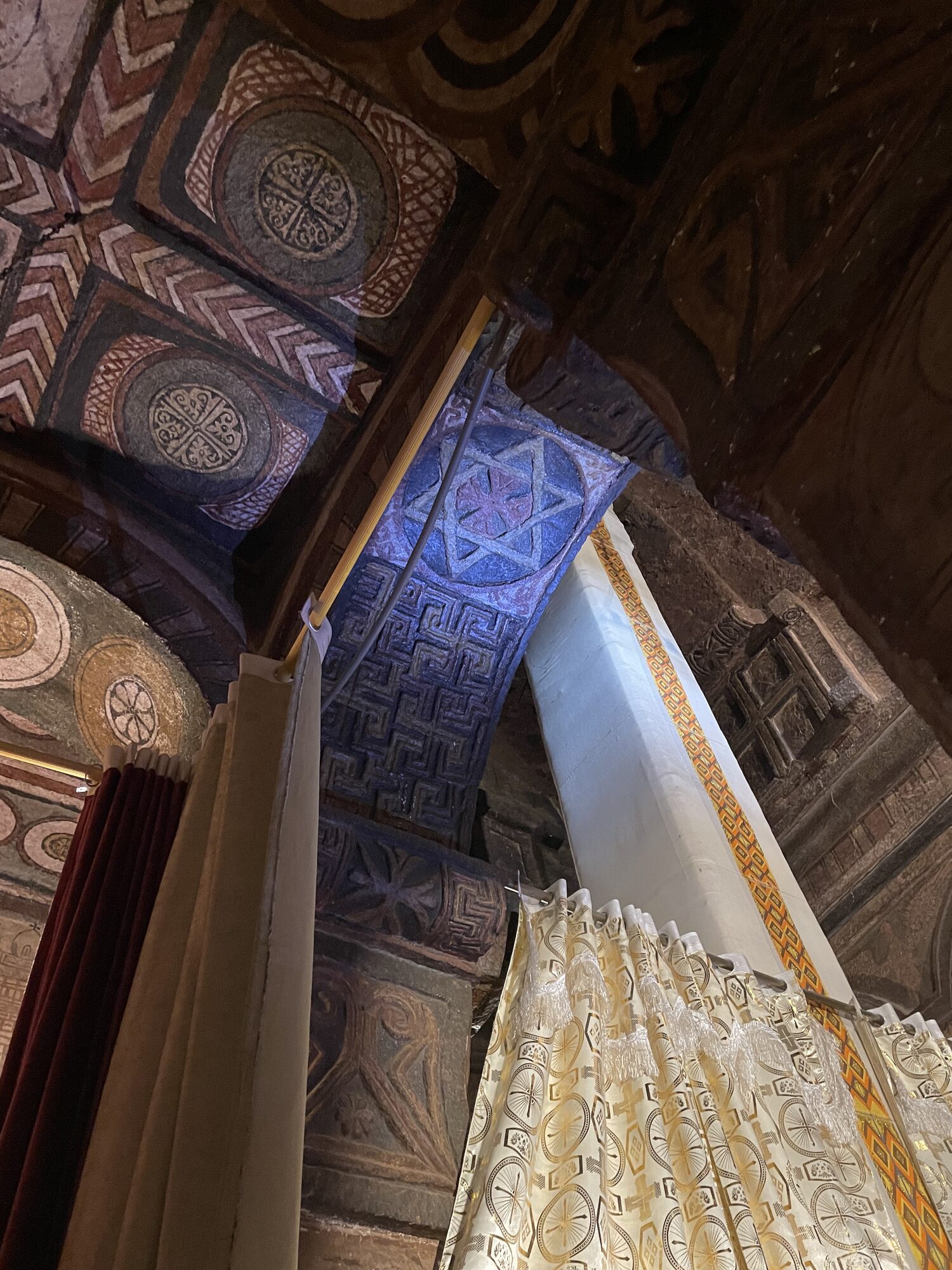
The site's layout mirrors the holy city: a stream called Yordanos (Jordan) divides the northern and southern church clusters. The symbolism is everywhere — in the cross-shaped plans, the hidden passages, the play of light through carved windows that turns stone into something luminous.
Antonin's Reflections
"The first day at the church, I prayed to God and to Jesus. Asking for guidance to continue opening my heart. And this is exactly what I got."
"For years I've been trying to follow Jesus wisdom, not as a structural religion but as a model of love I admire."
"It's sad to leave tomorrow, but I'm grateful I came without planning it during the celebrations, what a divine timing."
The Body Prays
Ethiopian Orthodox worship engages the whole body — not just the mind. Worshippers dance and sing together (so different from the stillness of French churches). They prostrate themselves on the ground. They fast for weeks at a time. They walk for days on pilgrimage, arriving barefoot at the church doors.
During Genna, thousands gather for all-night vigils — wrapped in white shawls, praying in the cold mountain air until dawn. Children sleep nestled against their parents. Elders lean on prayer sticks. The sound rises and falls like breath itself.
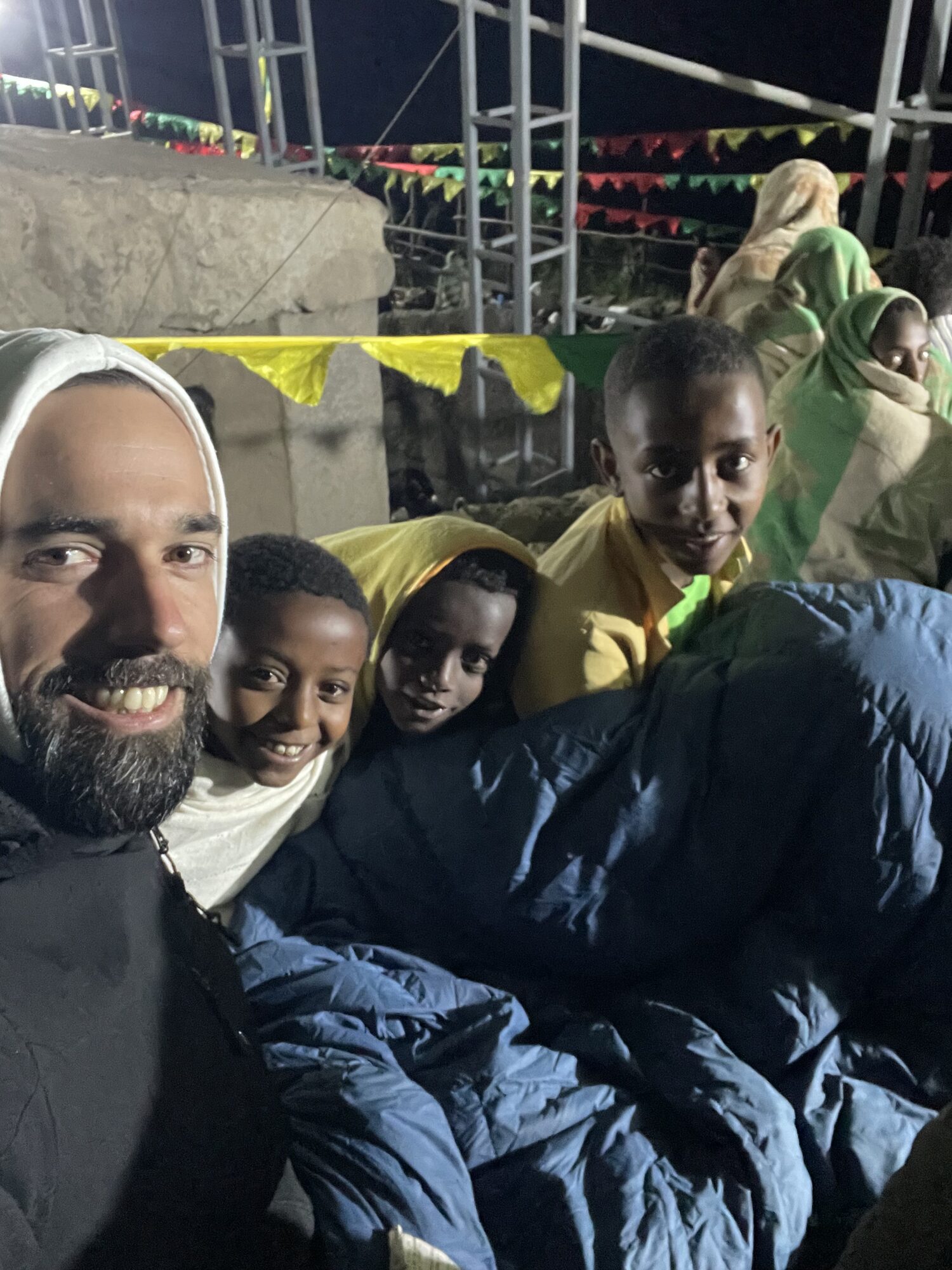
"People here follow Christianity as a celebration of life. Even with little money, they enjoy life so much because they're always together. In richer countries we lost that, we live more isolated, and I'm not sure the money really makes up for the lack of connection."
Lalibela asks a question most sacred places have stopped asking: what does it look like when faith is not inherited but lived? When worship is not an hour on Sunday but the rhythm of every day? When a church is not a building but a community carved into the earth itself?