A new message from Sisay
39 seconds
Impact and accountability
Keep value local, choose accountable organizations, and let people in Lalibela set the priorities.

First distribution · Update:
Sisay has sent photos from the first distribution and videos of the local food purchases. This first round supported 5 families, with 16 kg of teff, 2 kg of split lentils and 1 litre of cooking oil per family.
I funded this first round myself. I’m sharing it here so you can see where the support goes, and inviting anyone who can to help us buy the next packages.
Thank you to everyone following this project, sharing the fundraiser and helping locally. It’s a small start, but having food at home can ease some of the pressure families are facing right now.
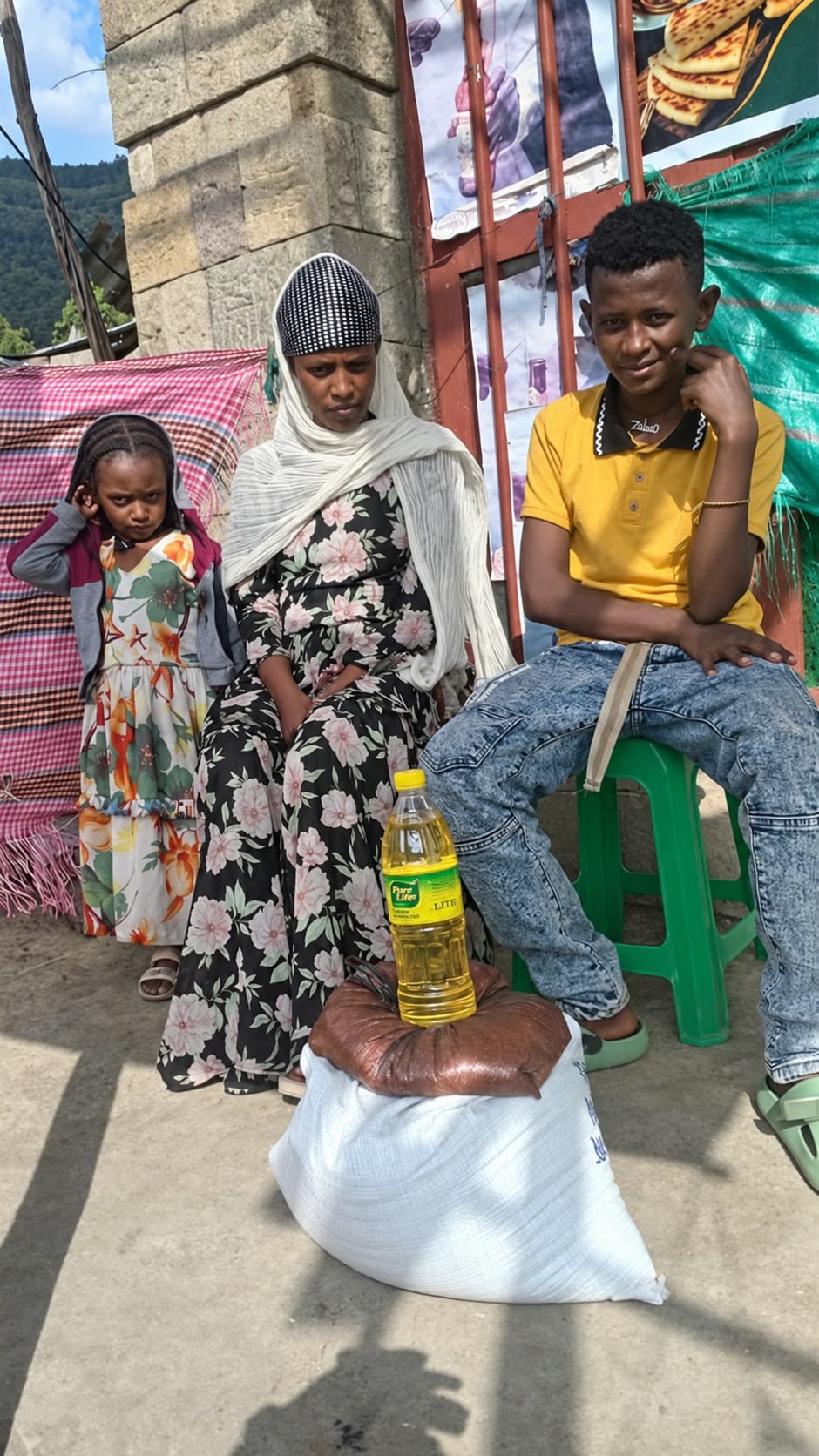
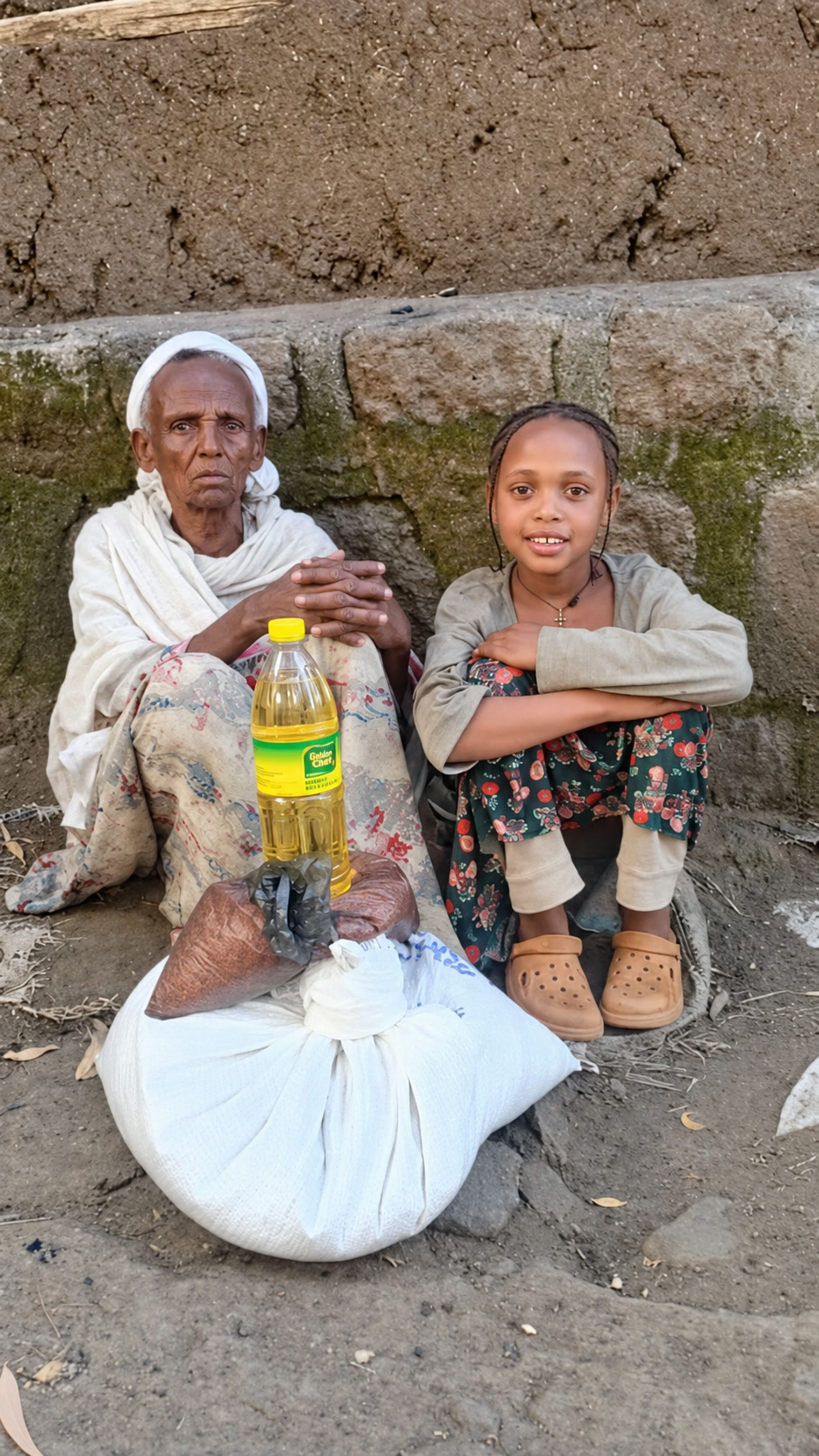
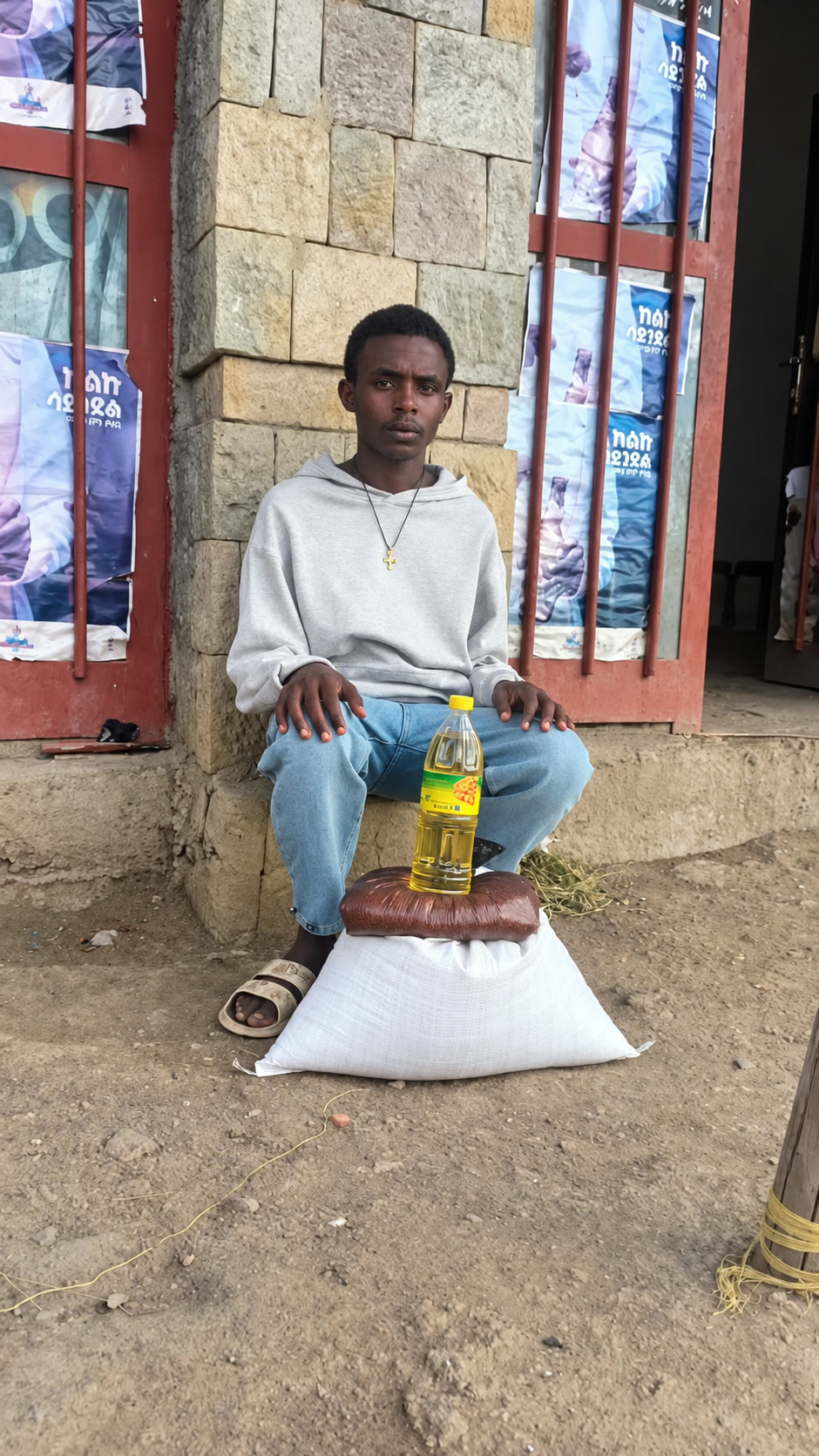
Photos enhanced with AI for clarity. Untouched originals: photo 1 · photo 2 · photo 3.
Around €20 can help fund the next family’s package. Any amount helps. If you can’t donate, sharing this page with a few friends helps too. Thank you ❤️
Help fund the next packages ↗A message from Sisay and four clips from the food purchases. Tap a video to watch with its original sound.
39 seconds
15 seconds
30 seconds
28 seconds
35 seconds
The first distribution is confirmed by Antonin, with photos and videos supplied by Sisay. Receipts and the final packaging and transport costs will be added when received. See the budget and public support log ↓
Food and essentials · Community campaign
Antonin has personally contributed around €200 for football equipment and food support. The first food packages have now reached 5 families. The fundraiser is open to anyone who wants to help buy the next packages, with Sisay coordinating in Lalibela.
Last updated: . Purchases are reported by Antonin using Sisay’s breakdown. This is a manually updated log, not a live donation feed.
Purchase reported for 5 families
80 kg of teff, 10 kg of split lentils and 5 litres of oil. Food cost: 15,100 birr, funded by Antonin. Receipts are awaiting publication.
First distribution confirmed
Photos from the first distribution and videos of the market purchases are now published. Receipts and the individual collection record are still awaited. The 1,400 birr packaging and transport reserve will be reconciled against actual costs.
Open for donations
The same package budget for 5 more families is 16,500 birr. Around €100 in donations can help fund this next round.
€500 campaign goal
Every additional contribution helps fund another package. Around €20 can help fund one family, depending on prices, exchange rates and fees. Each round will have its own budget and delivery record.
16 kg of teff + 2 kg of split lentils + 1 litre of cooking oil. Food: 3,020 birr. Allocated packaging and transport: 280 birr. Total budget: 3,300 birr per family. This is one food package, not a promise of a fixed number of meals or a month of food. Household sizes have not yet been recorded.
The full package budget is about €18.35 per family. Around €20 can help fund one package, €40 two and €100 five. Any smaller donation helps too.
Donations → GoFundMe → Antonin → Remitly → Sisay → local food purchases and distribution. Neither Antonin nor Sisay takes a salary or commission. 100% of funds received after payment and transfer costs goes to food packages and necessary packaging and transport. No campaign donations are allocated to football equipment; that was part of Antonin’s personal contribution.
GoFundMe’s transaction fee in France is 2.9% + €0.25 per donation. Its optional tip supports GoFundMe separately. Transfer charges, actual exchange rates, packaging and transport will be listed separately. EUR and birr balances are kept separate.
| Account | Amount | Record / evidence |
|---|---|---|
| Antonin’s personal support (EUR) | Around €200 | Reported by Antonin; football equipment and food support combined, separate from GoFundMe |
| GoFundMe donations (EUR) | €0 | Dashboard checked 21 October 2026; manually updated, not a live total |
| GoFundMe funds withdrawn (EUR) | €0 | No campaign donations received as of this update |
| GoFundMe transaction fees (EUR) | €0 so far | France: 2.9% + €0.25 per donation; future fees reported separately |
| Personal food transfer received locally (ETB) | 16,500 birr | Sisay’s message confirms receipt; transfer record awaiting publication |
| Food bought for 5 families (ETB) | 15,100 birr | Purchase reported by Antonin using Sisay’s itemised breakdown; receipts pending |
| Packaging and transport reserve (ETB) | 1,400 birr | Budget allocation, not a confirmed expense |
| Actual packaging and transport spend (ETB) | Not yet reported | Awaiting receipts or local spending record |
| Remaining local balance (ETB) | To be reconciled | 16,500 minus 15,100 leaves 1,400 before packaging and transport; actual balance pending |
| Transfer fees and actual EUR debit | Not yet reported | Kept separate; no exchange rate inferred from the approximate €200 contribution |
Round 1: first distribution to 5 families confirmed by Antonin. Photos show families with their packages, and Sisay’s videos document the market purchases. The purchase totals are 80 kg of teff, 10 kg of split lentils and 5 litres of cooking oil. The exact collection date, household sizes and a package-by-package collection record have not yet been supplied. We will add anonymous household references when the local record is available, without publishing names, phone numbers or addresses.
Antonin confirmed the first food distribution to 5 families and supplied 3 photos and 5 videos from Sisay. See the photos and market videos. Receipts and final packaging and transport costs remain pending. The next round is open for support.
Antonin reported the first food purchase for 5 families and around €200 of personal support across football equipment and food. Sisay’s breakdown totals 15,100 birr for food, with 1,400 birr reserved for packaging and transport. GoFundMe donations stood at €0 when checked. The next round is now open for support.
The GoFundMe campaign launched for immediate food and essentials.
We will publish purchase photos, receipts and spending records for every round, with private details removed. Photos of the first distribution and videos of the purchases are published; receipts are still pending. Earlier visit photos are kept separate from this distribution record. Families do not need to appear in photos to receive support. Unspent funds will support further food packages and be recorded in the next round.
Where to begin
Hire local expertise, stay in locally owned accommodation, buy directly from artisans, eat in independent restaurants, and give yourself time in town. These choices keep more visitor spending in Lalibela and make the relationship easier to understand.
If you want to donate, use an established organization with public programs, clear governance, and regular reporting. An appeal should be able to explain who chose the priority, how funds move, and how progress will be documented.
Four practical choices
Work with licensed local guides and book directly where practical. Guides explain the architecture and help visitors move through active places of worship with care.
Meet a local guideChoose locally owned rooms, restaurants, transport, and workshops. Ask before photographing people, and pay a fair price without making every exchange a negotiation.
Plan your visitLook for registered status, published programs, local participation, and recent reporting. Our Peter Bachmann Foundation profile shows how readers can follow claims back to an organization’s own sources.
Review the foundation profileConservation includes the clergy, craftspeople, residents, and traditions that give the churches meaning. Strong projects connect preservation with local knowledge, skills, and livelihoods.
Read about conservation
The wider picture
Conservation decisions affect worship, movement, work, housing, and tourism. Economic changes affect guides, artisans, hotels, restaurants, drivers, clergy, and families across Lalibela.
Protecting the sacred landscape therefore involves architecture, religious practice, local skills, viable livelihoods, and residents directly involved in development decisions.
Connected priorities
Water, erosion, seismic activity, and human use place long-term pressure on the churches. Ethiopian heritage authorities, church custodians, UNESCO, and research teams continue to study protection and restoration.
UNESCO property recordWorship, pilgrimage, festivals, sacred objects, music, language, and custodial knowledge carry Lalibela’s religious meaning. Visitor management must recognize that the churches remain in use.
Understand the sacred landscapeTourism supports a wide network of work. Local guides, rooms, restaurants, transport, and crafts distribute visitor spending more directly across the town.
Build a thoughtful stayConservation projects can combine technical research with local training, heritage management, tourism planning, and community participation. The decision-making structure matters as much as the physical work.
Read about current workBefore you support a project
A good campaign name is not evidence. Ask for enough detail to understand who holds authority and what happens after money is given.
Who sets priorities, approves spending, and can change the plan?
What will the project do, for whom, and over what period?
How is money received, controlled, spent, and recorded?
How are children, personal data, consent, and unequal power handled?
What evidence of progress, difficulty, and spending will be shared?
Children and giving
If a child asks for help, avoid handing out cash. If you want to respond in the moment, buy useful school items such as notebooks, pens, dictionaries, or a backpack. Ask what is actually needed.
Even better, donate supplies or funds directly to a school. A teacher or school leader can identify priorities and distribute the support where it is most useful.
Read Antonin’s field noteA simple standard