Food & Coffee in Lalibela

The birthplace of coffee, meals for a dollar, and a table where strangers become family.

Ethiopian food is extraordinary — and extraordinarily affordable. A full meal of injera topped with spicy stews costs $1–2 at local restaurants. Coffee — which Ethiopia invented — is served in a ceremony that takes 30 minutes and costs $0.30. The food is communal: everyone eats from the same plate, tearing pieces of spongy injera to scoop rich, fragrant stews. In Lalibela, a meal is never just a meal. It is an act of generosity, an invitation to connect, and sometimes the most meaningful thing you do all day.

Injera — The Heart of Every Meal

Every Ethiopian meal begins and ends with injera. This spongy, slightly sour flatbread is made from teff — the world's tiniest grain, cultivated in the Ethiopian highlands since around 10,000 BC. Teff flour is mixed with water and left to ferment for two to three days using ersho, a starter liquid passed from one batch to the next, sometimes across generations. The fermented batter is poured in spirals onto a large circular griddle called a mitad, where it steams and bubbles into its signature lace-like surface.

Injera is your plate, your utensil, and your bread. A large round sheet is laid down, stews and salads are spooned on top, and you tear off pieces to scoop each bite. No forks, no knives — just your right hand and the food in front of you. When the entire "tablecloth" of injera is gone, the meal is over.

Everyone eats from the same plate. This is not a convenience — it is the point. Sharing a plate means sharing trust. There is an Ethiopian saying: "Those who eat from the same plate will not betray each other."

White teff injera, lighter in color and milder in taste, is considered higher quality and more expensive. In Lalibela, most local restaurants serve a mix of teff and barley or sorghum injera — slightly darker, a bit tangier, and honestly delicious. The naturally gluten-free grain packs more calcium and iron than wheat, and the fermentation makes it easy on the stomach.

What to Eat

Ethiopian cuisine is built on three pillars: berbere spice, clarified butter, and slow-cooked stews called wot. Here are the dishes you'll find across Lalibela — learn the Amharic names and you'll be ordering like a local within a day.

🍚

Doro Wot

The national dish. A chicken drumstick slow-cooked in a thick, rich berbere sauce with hard-boiled eggs. Reserved for celebrations and holidays — but available every day in restaurants. The queen of Ethiopian food.

🍲

Shiro Wot

Ground chickpea flour cooked into a smooth, creamy stew with onions, garlic, and tomatoes. The most popular fasting dish and the daily staple for millions. Simple, satisfying, and deeply flavored. Often the cheapest thing on the menu — and the best.

🍖

Tibs

Cubes of beef or lamb pan-fried in butter with onions, garlic, and peppers. Can be mild (tibs) or fiery (derek tibs). Served sizzling on a clay plate. The most straightforward meat dish — and reliably excellent.

🥩

Kitfo

Raw minced beef seasoned with mitmita (fiery chili powder) and niter kibbeh (spiced clarified butter). Served with gomen (collard greens) and ayib (fresh cottage cheese). This is Ethiopia's steak tartare — order it leb leb (lightly cooked) if you prefer.

🍅

Beyaynetu

A vegetarian feast: a large injera covered in small portions of lentils, chickpeas, sautéed greens, beet salad, and various spiced vegetables. The best way to taste everything at once. Always available on fasting days — and it's often the most colorful plate in the house.

🌞

Firfir

Shredded pieces of yesterday's injera cooked into a sauce — a classic breakfast dish. The spicy version (fit-fit) uses berbere; the milder one uses butter and spices. Ethiopia's answer to French toast, but better.

The Spices Behind It All

Berbere is the backbone of Ethiopian cooking — a warm, complex blend of dried chillies, fenugreek, ginger, cardamom, cinnamon, cloves, and a dozen other spices. It is not designed to burn your face off. It builds a slow, layered heat that unfolds over the course of a meal. Mitmita is the hotter cousin — a pure chili powder used to season raw meat dishes like kitfo. And niter kibbeh, Ethiopia's spiced clarified butter, ties everything together — infused with sacred basil (besobela), fenugreek, Ethiopian cardamom (korarima), and turmeric.

Gursha — Feeding Each Other

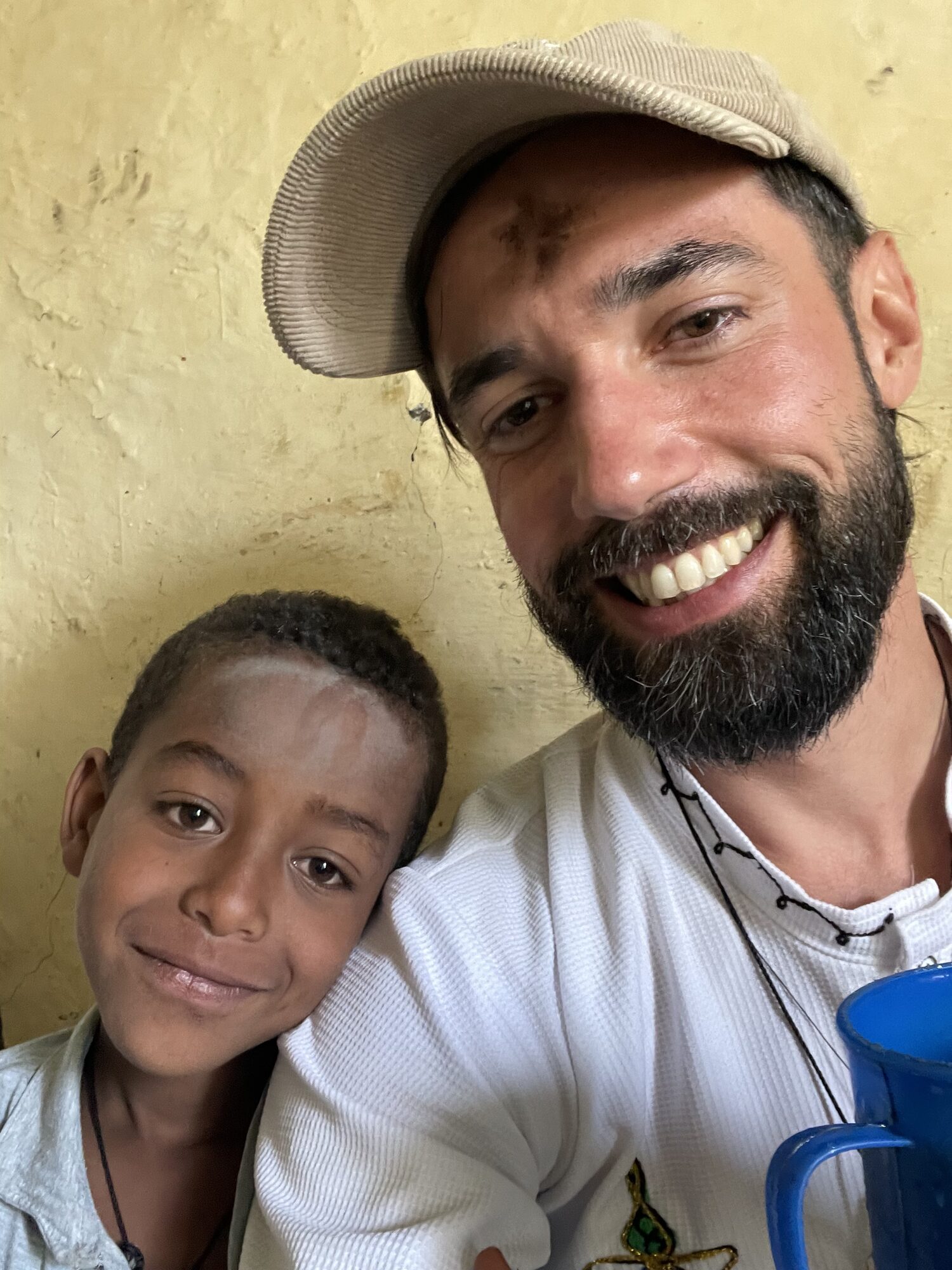
Sharing a meal with a child in Lalibela

At some point during your time in Lalibela, someone will take a piece of injera, load it with the best stew on the plate, and place it directly into your mouth. This is gursha — an Amharic word meaning "mouthful" — and it is one of the most intimate gestures of Ethiopian hospitality.

Gursha is not reserved for special occasions. It happens at everyday meals, between friends, between families, between a host and a guest who arrived ten minutes ago. The larger the gursha, the stronger the affection. When someone feeds you, they are saying: I value you so much that rather than feeding myself, I feed you.

It feels strange the first time. By the third, you start doing it back — and that is the moment you understand something about Ethiopia that no guidebook can teach you. The table is not a place to eat. It is a place to love.

What Things Cost

Ethiopia is one of the most affordable countries on Earth for visitors. In Lalibela, you can eat extraordinarily well for almost nothing.

Item Price Notes
Full meal (injera + wot) $1–2 Local restaurants, unlimited injera
Coffee ceremony $0.30 Three rounds, freshly roasted
Fresh juice $0.50–1 Mango, avocado, or layered spris
Beer $1 Local brands: St. George, Dashen, Habesha
Tej (honey wine) $0.50–1 Ethiopia's ancient mead, served in a berele glass
Tourist restaurant meal $4–8 International menus, higher prices
Cooking class $10–15 Learn to make injera and wot, then eat it all

A daily food budget of $5–8 covers three meals, coffee, and a beer. You will not find this anywhere else in the world.

The Coffee Ceremony

Ethiopia didn't just discover coffee — it invented the entire culture around it. The legend says that in the 9th century, a goatherder named Kaldi noticed his goats dancing after eating red berries from a bush in the Kaffa forest of southwestern Ethiopia. He tried the berries himself. The rest is the history of the world's most consumed beverage. Even the word "coffee" may derive from "Kaffa."

In Lalibela, the coffee ceremony is not a tourist attraction. It is a daily social ritual that happens in homes, on sidewalks, in the corner of every restaurant. If someone invites you to coffee, say yes. You are being offered something far more valuable than caffeine.

How It Works

The ceremony is traditionally performed by a woman of the household — it is an honored role. The floor is scattered with fresh grass and flowers. Frankincense burns on a small charcoal burner, filling the room with smoke. Then the coffee begins.

Green coffee beans are washed and placed on a flat iron pan over an open flame. As they roast, the woman brings the pan around so everyone can lean in and inhale the aroma — this is not optional, it is part of the ritual. The roasted beans are ground by hand in a mukecha, a wooden mortar and pestle, then sieved several times for fine consistency. The grounds go into a jebena, a beautiful clay pot with a spherical base, a long neck, and a straw lid. Water boils, coffee brews, and the first cups are poured.

Abol

First Round

The strongest cup. Rich, full-bodied, intense. Represents awakening — the beginning of connection between host and guests. This is where the conversation starts.

Tona

Second Round

Gentler, smoother. The same grounds are brewed again. Represents the deepening of relationships — the conversation moves from pleasantries to substance.

Baraka

Third Round

The lightest cup. Baraka means "blessing." This final round is believed to bring peace and harmony to everyone present. Leaving before the third cup is considered impolite.

The ceremony takes 30 to 60 minutes. Popcorn, peanuts, or himbasha bread are served alongside. You may add sugar, salt, or even butter to your cup — there is no wrong way. The point is not efficiency. The point is presence. In a world that has turned coffee into a drive-through transaction, Ethiopia still treats it as a gift of time.
Where to Eat in Lalibela

Our honest advice: eat at local restaurants, not tourist ones. The food is better, the prices are lower, and your money goes directly into the community. Tourist restaurants charge $4–8 for the same dishes that cost $1–2 at a local place — and the local version is almost always more flavorful.

That said, a few places stand out:

Ben Abeba

Perched on a hilltop with stunning views, this Ethiopian-Scottish fusion restaurant has the most striking architecture in town. Go for the sunset and the Ethiopian scotch egg. Tourist prices, but an experience worth having once.

Alem's Cooking Class

Learn to make injera and wot from scratch with Alem, then eat everything you cooked. The best way to understand the food — and to take the experience home with you.

Torpedo Tej Bet

Lalibela's best honey wine house. Go after 8 PM for azmari music — traditional singer-poets who improvise praise songs for the audience. The tej is sweet, strong, and served in a berele flask. The dancing is contagious.

Invite children to eat with you. Many children in Lalibela don't eat every day. When you sit down at a local restaurant, invite the kids nearby to join you. A full meal costs $1–2. For you, it's loose change. For them, it might be the only meal of the day. This isn't charity — it's sharing a table, which in Ethiopia is the most natural thing in the world.

Fasting Season — The World's Best Vegetarian Food

The Ethiopian Orthodox Church has the strictest fasting calendar in all of Christianity: 180 days per year for laypeople, up to 252 for clergy. During fasting periods, no meat, no dairy, no eggs — and no food at all before 3 PM. Every Wednesday and Friday throughout the year are fasting days. Then there are the major seasons: 55 days of Great Lent before Easter, 40 days of Advent before Genna, 15 days for the Assumption, and several more.

What this means for you as a visitor is simple: Ethiopian vegetarian food is not an afterthought. It is a centuries-old tradition refined across 180 days a year, every year, for over a millennium. The beyaynetu fasting platter — lentils three ways, chickpea stew, sautéed greens, beet salad, tomato salad, spiced potatoes — is often the most flavorful and varied plate in the restaurant.

If you visit during Lent (the 55 days before Ethiopian Easter, typically in March–April), the entire town eats vegan. Every restaurant becomes plant-based. The creativity and depth of flavor in fasting food puts most Western vegetarian cuisine to shame. It is, without exaggeration, some of the best plant-based eating on the planet — and it has been this way for 1,700 years.

Beyond Coffee — What to Drink

Tej is Ethiopia's ancient honey wine — a mead fermented with gesho leaves that give it a slightly bitter edge. It is sweet, deceptively strong, and served in a round-bottomed glass called a berele. Head to Torpedo Tej Bet in Lalibela for the best version. It has been brewed the same way for centuries.

Fresh juice is extraordinary and cheap. Mango, avocado, papaya, guava — or the layered spris, where multiple fruit juices are poured into a glass in colorful stripes. Order one for $0.50–1 and watch them blend it in front of you.

Local beer — St. George, Dashen, and Habesha — is light, refreshing, and costs about $1. St. George (Giorgis) is named after Lalibela's most famous church, making it the only appropriate beer to drink here.

Tella is the traditional homebrew — a slightly smoky, slightly sour beer made from barley and gesho. You won't find it in restaurants, but if a local offers you some from their home, accept. It tastes like history.

Tips for Eating in Lalibela

Use Your Right Hand

Always eat with your right hand. The left hand is considered unclean in Ethiopian tradition. Tear a piece of injera, scoop some stew, and pop it in your mouth in one motion. You'll get the hang of it within two bites.

Accept the Gursha

When someone feeds you by hand, open wide and accept it graciously. Then do it back. The larger the mouthful, the more affection it carries. Don't overthink it — just enjoy the moment.

Stay for All Three Cups

If you're invited to a coffee ceremony, stay for all three rounds. Leaving before baraka (the blessing round) is considered rude. Besides — the best conversations happen during the third cup.

Go Local

Skip the tourist restaurants. Walk a block away from the main road and eat where locals eat. Point at what someone else is having if you can't read the menu. The food will be better, the price will be lower, and your birr goes directly into the community.

Try Everything

Order a beyaynetu (mixed platter) on your first day. Try kitfo if you're adventurous. Drink tej at least once. Have firfir for breakfast. You have nothing to lose — everything costs a dollar or two, and the worst that happens is you discover a new favorite food.

Bring Cash

No restaurant in Lalibela accepts credit cards. Bring enough Ethiopian birr for your food budget — $5–8 per day is generous. Exchange money in Addis Ababa before you fly in, as options in Lalibela are extremely limited.

Ready to Taste It?

The best Ethiopian food is not in a restaurant in London or New York. It is on a $1 plate in Lalibela, shared with people who treat a stranger like family. Come hungry.

See also: Itinerary · Where to Stay