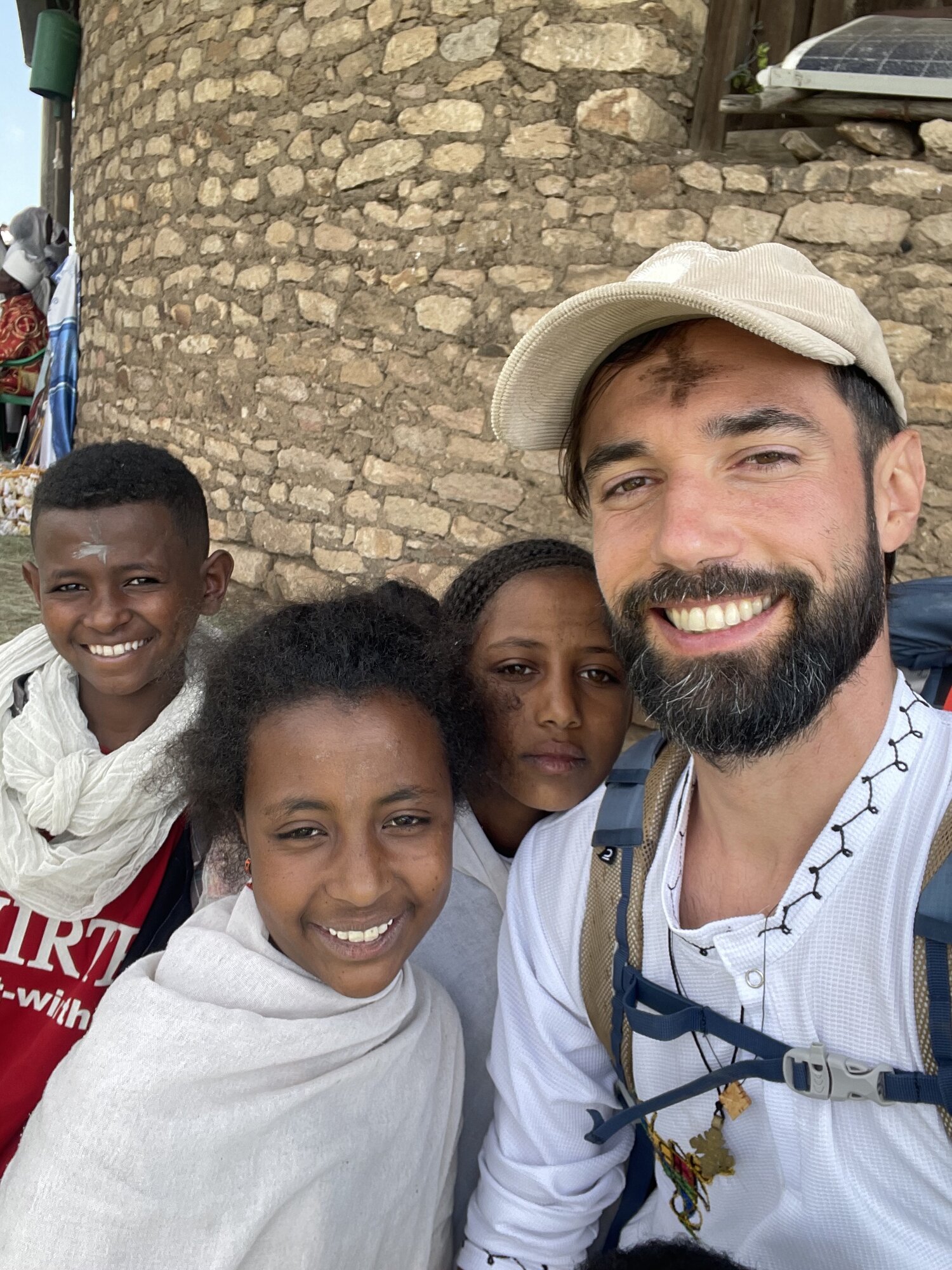
Local Guides
The guides of Lalibela don't just show you churches. They share their history, their faith, and their lives. Most lost their income when tourism collapsed.
Lalibela isn't a museum. It's a living, breathing sacred city — eleven churches carved from solid rock eight centuries ago, still active places of worship today. Priests lead services in Ge'ez. Pilgrims arrive on foot. The sound of prayer echoes through stone corridors just as it has since the 12th century.
But Lalibela is more than its churches. It's the faith that fills them, the ceremonies that light up the night, the coffee roasted in front of you, and the people who welcome strangers like family.
Four guides to the soul of Lalibela — its churches, its sacred traditions, its living culture, and the food that brings everyone together.
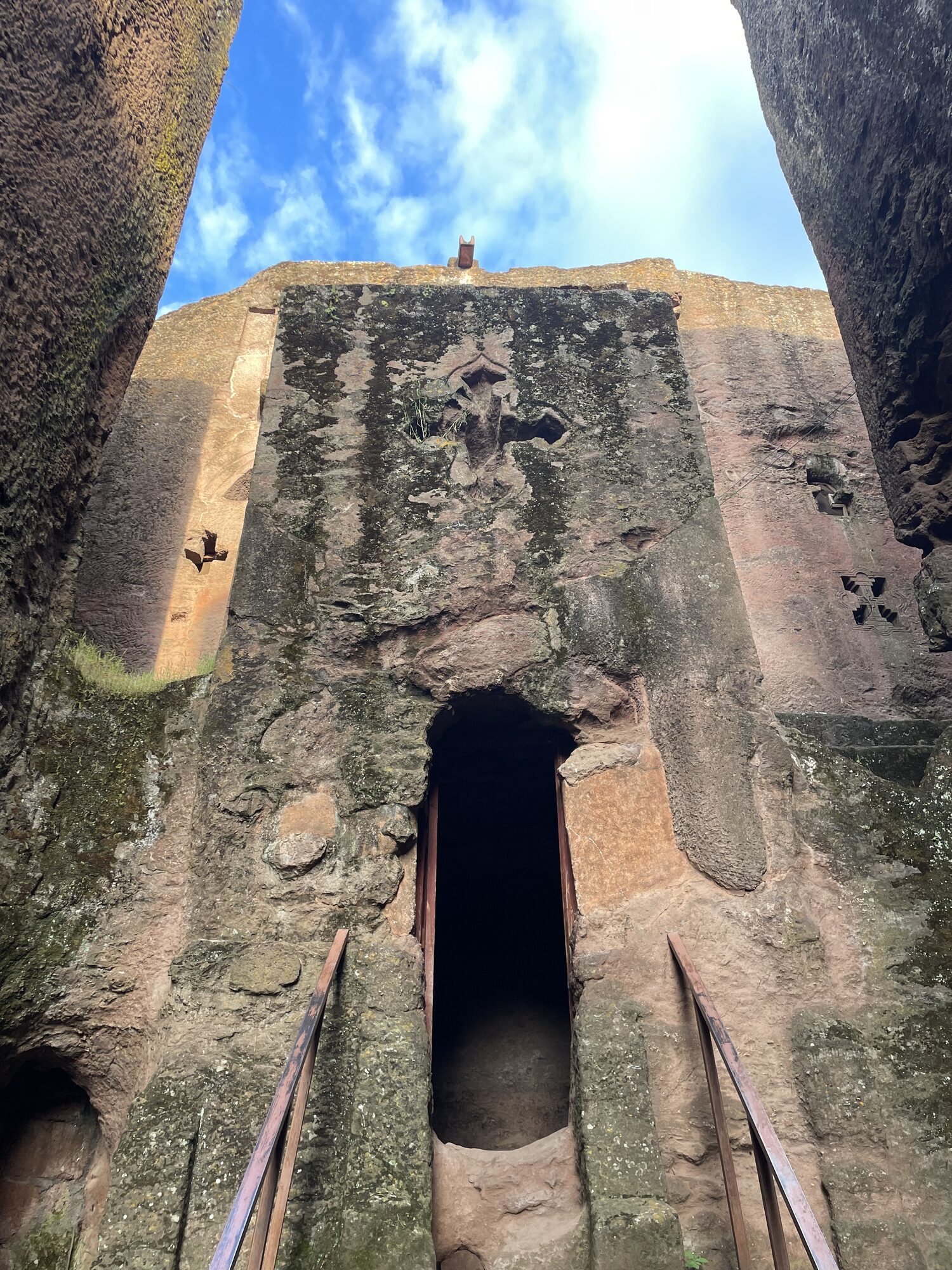
Eleven monolithic churches carved from living rock in the 12th century. No mortar, no joints — just stone shaped by human hands into spaces of worship that have endured for eight centuries.
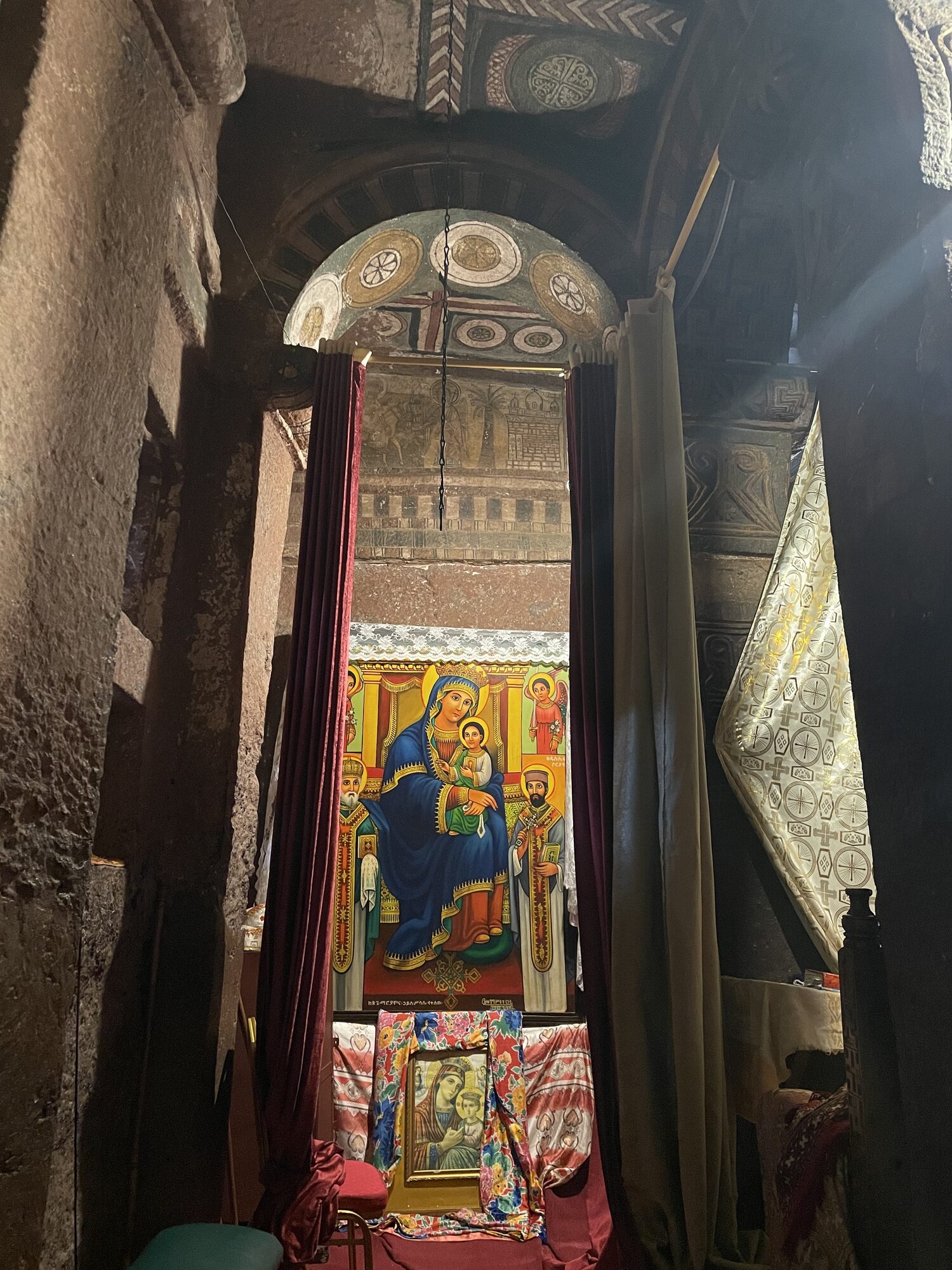
Night vigils under Ethiopian flags, ancient prayers in Ge'ez, priests who guard the Ark of the Covenant. The spiritual heart of Lalibela — where faith is carved in stone and lived in every breath.
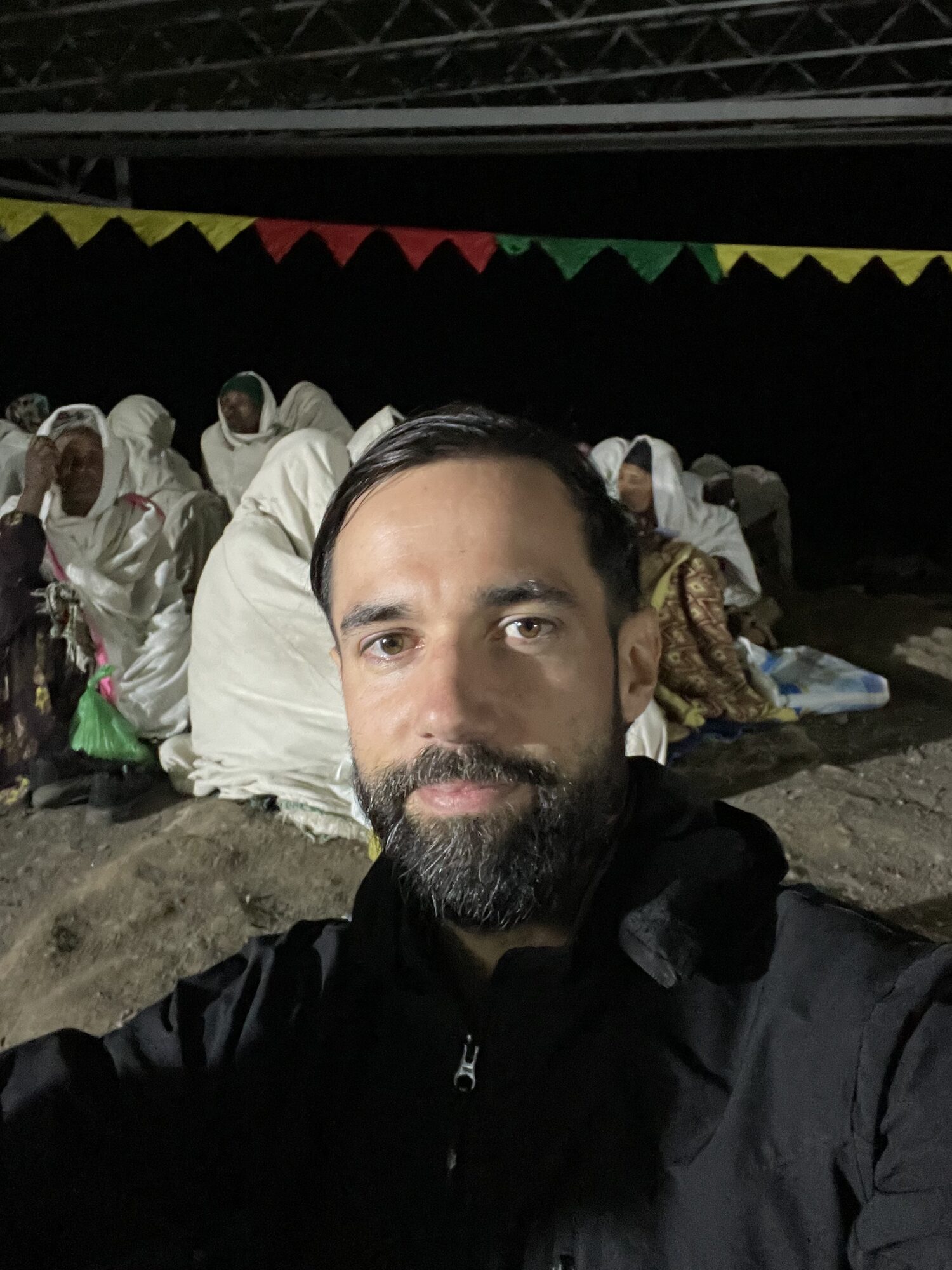
Timket, Meskel, Genna — ceremonies unchanged for centuries that draw pilgrims from across Ethiopia. A faith that dances, a community that shares everything.
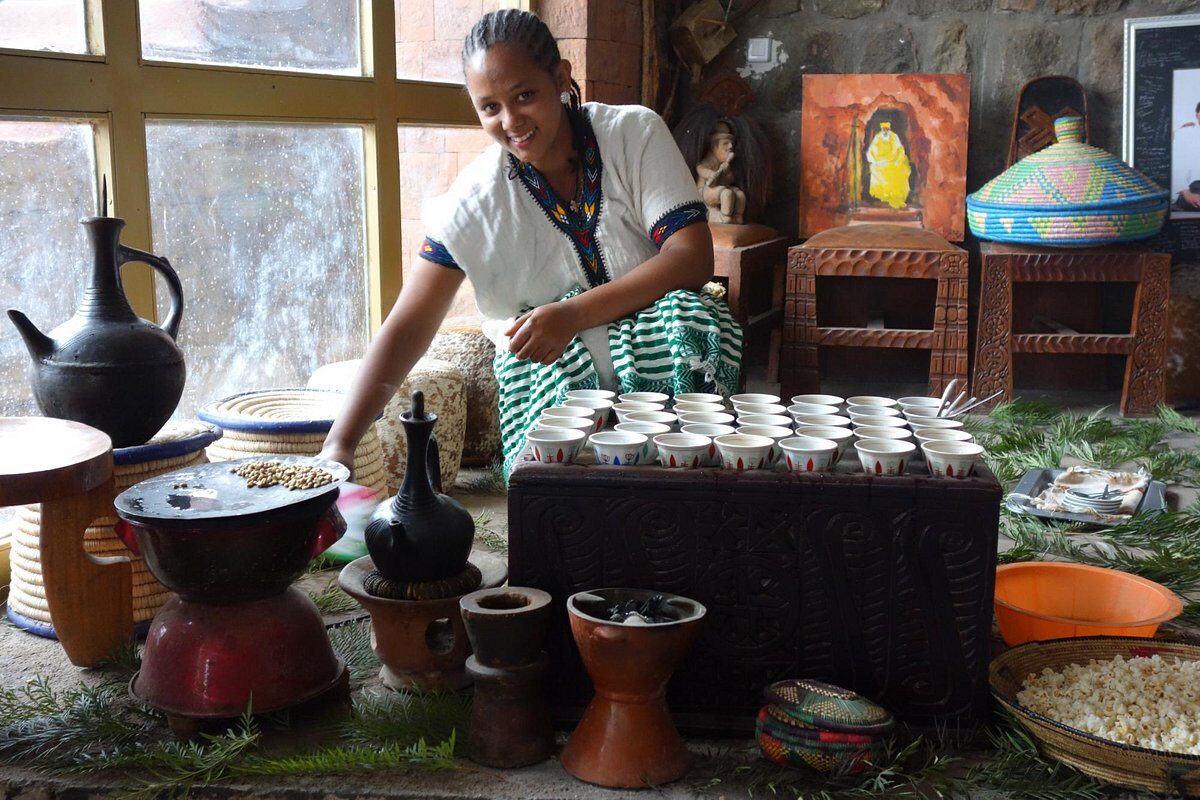
Ethiopia invented coffee. Meals for $1–2, the roasting ceremony, injera with spicy stews — and a table where strangers become family.
Lalibela's eleven rock-hewn churches are unlike anything else on Earth. They weren't built — they were carved. Excavated downward from the living rock, each church is a single monolithic structure, chiseled from the surrounding stone by hand.
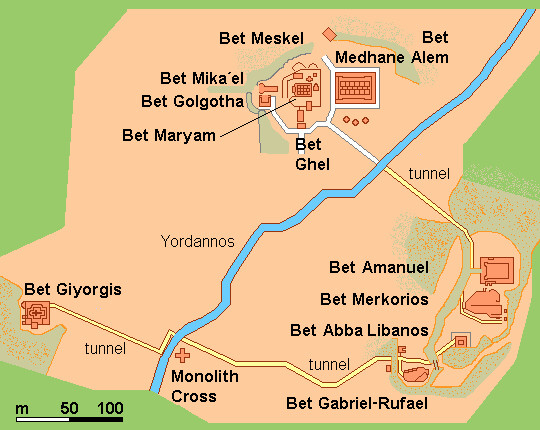
The most famous, Bet Giyorgis, stands in the shape of a perfect cross, sunk 12 meters into the ground. From above, it looks like a giant has pressed a cross-shaped stamp into the earth. From below, standing in the trench that surrounds it, the walls tower above you, and you understand why legends say angels helped King Lalibela carve them.
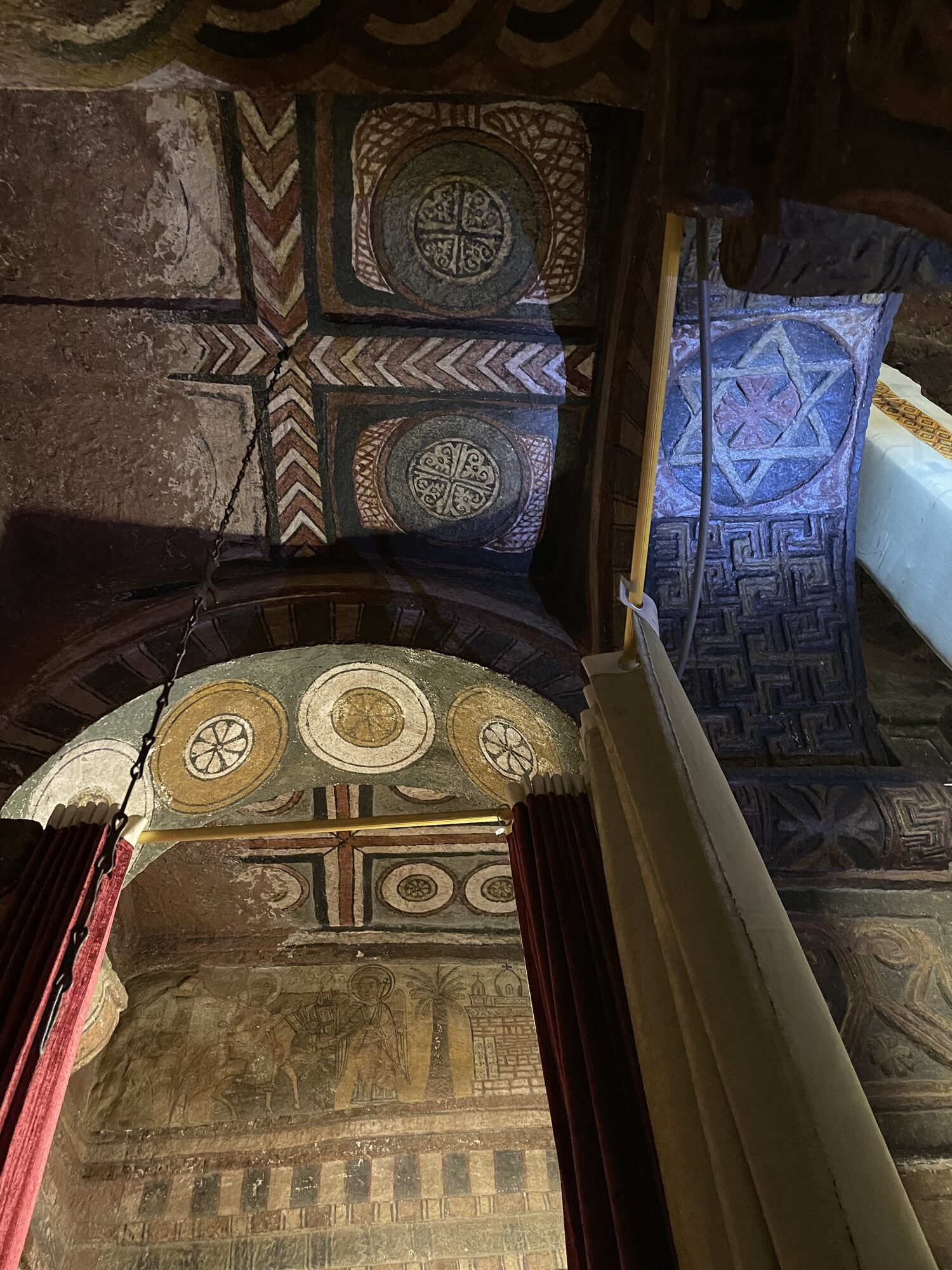
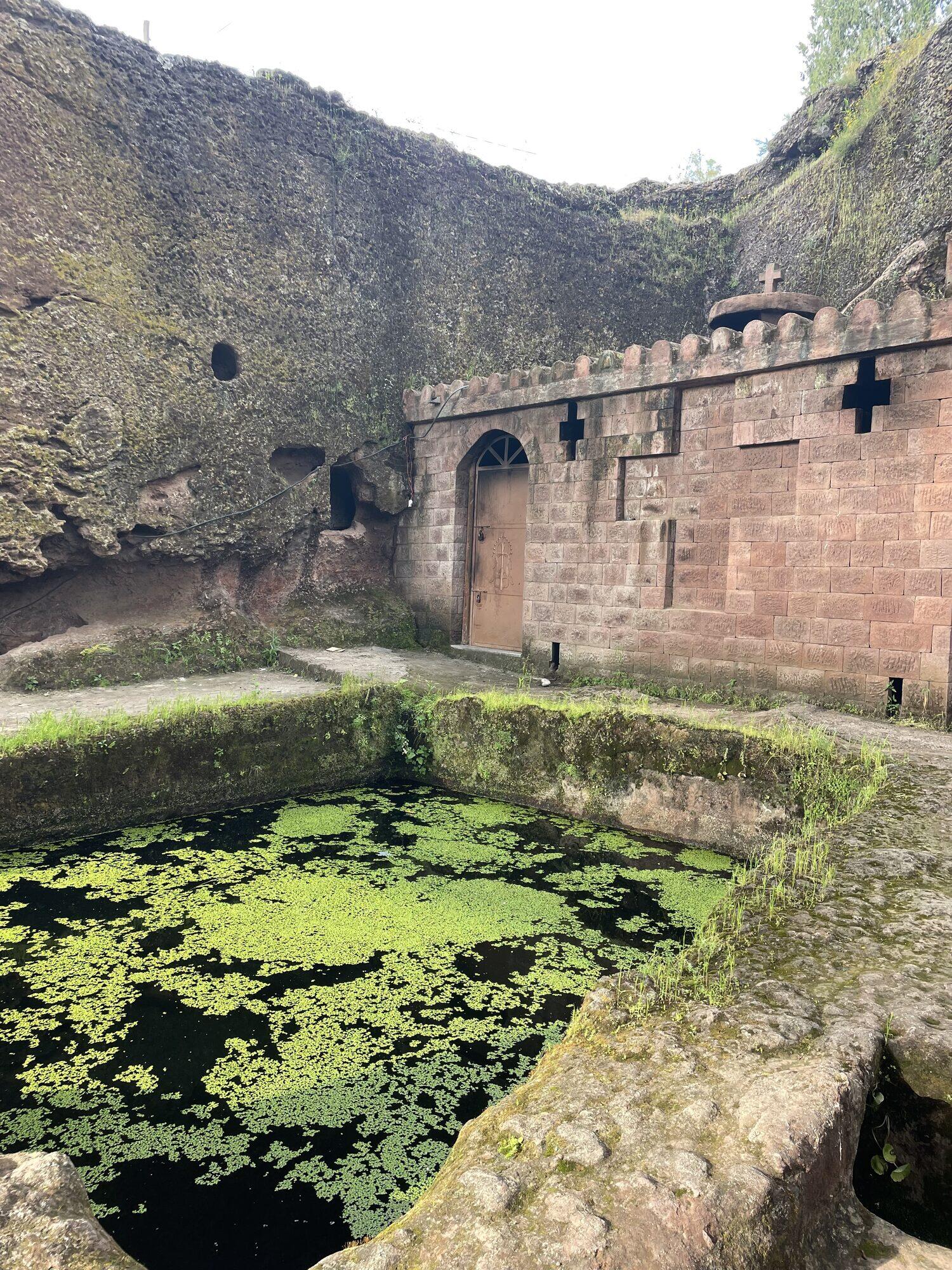
The churches date to the 12th and 13th centuries, though some scholars believe certain structures may be even older. They were conceived as a 'New Jerusalem' — a holy city in the Ethiopian highlands, complete with its own River Jordan (the Yordanos stream that flows through the site).
Today, every one of these churches is active. Priests lead services in Ge'ez. Pilgrims arrive on foot from distant regions. The sound of prayer echoes through stone corridors just as it has for eight centuries.
Lalibela isn't just its churches. It's the people who bring them to life — the guides who know every tunnel, the hotel owners who welcome you like family, the artisans who craft crosses by hand, and the children who light up when they see a visitor.
The guides of Lalibela don't just show you churches. They share their history, their faith, and their lives. Most lost their income when tourism collapsed.
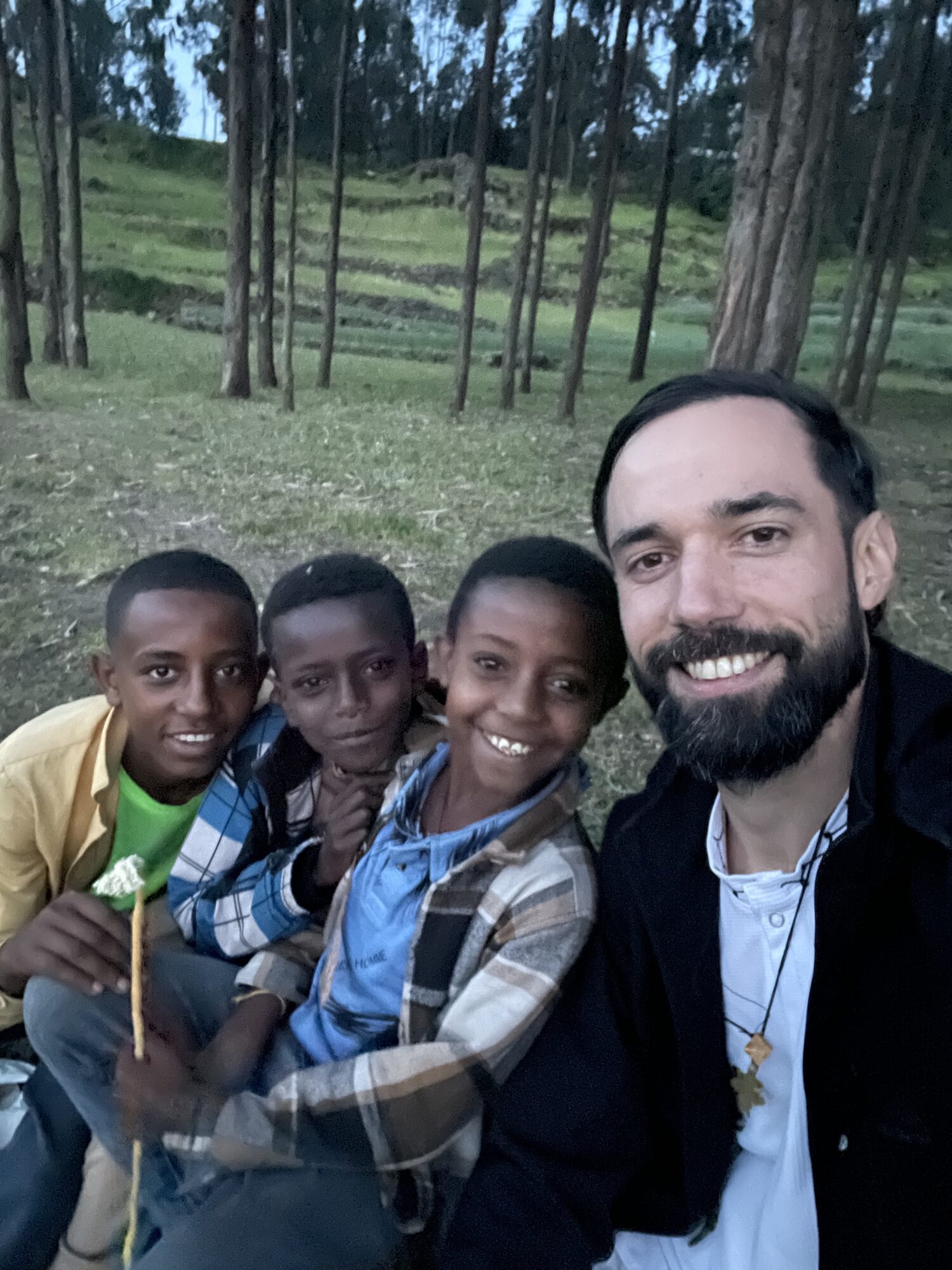
Curious, autonomous, full of heart. Many came from the countryside to attend school in town, living without their parents. They don't ask for money — they ask for notebooks and dictionaries.
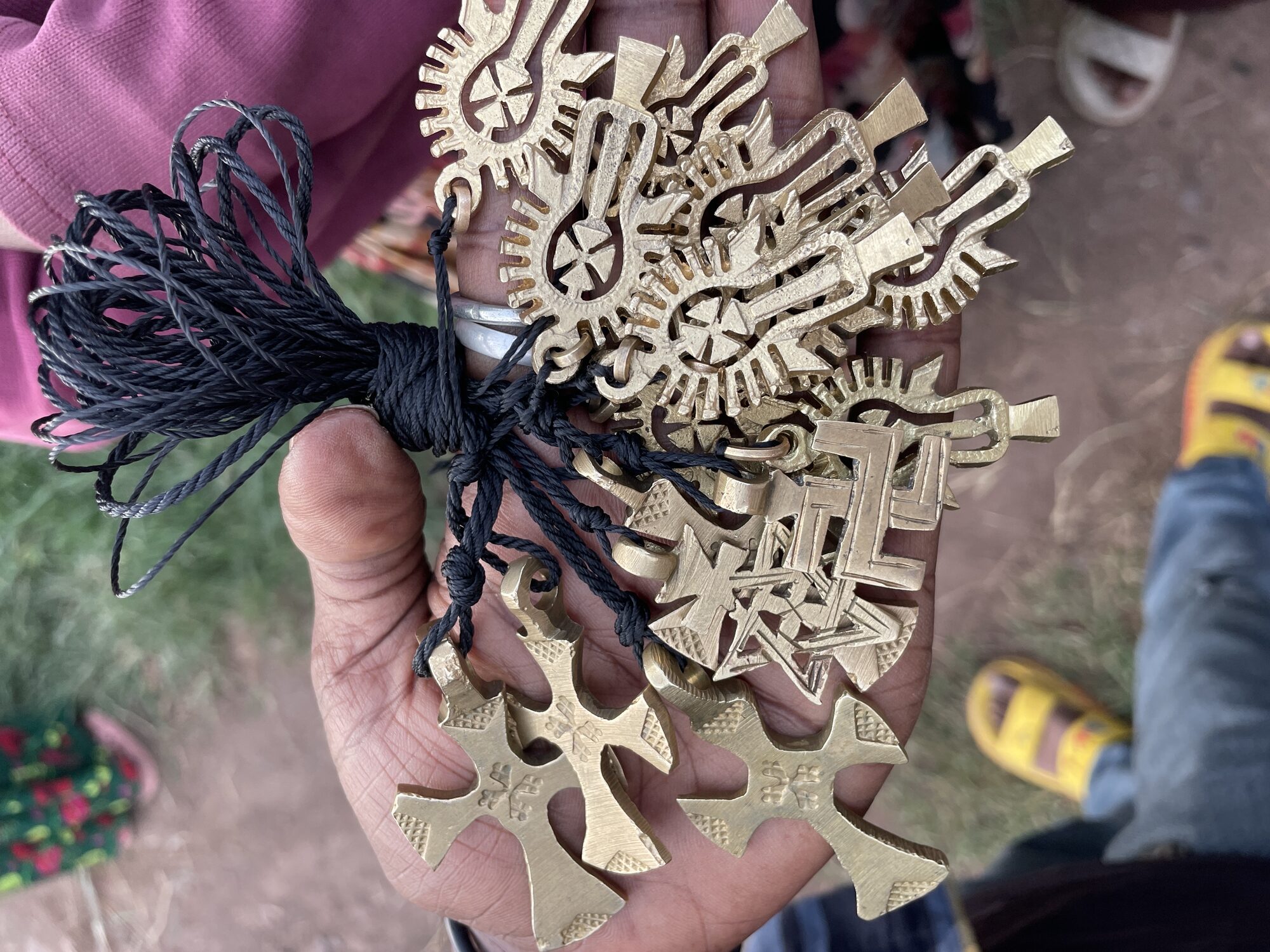
Each Ethiopian cross is unique — handmade, intricate, a prayer in metal. The craft has been passed down through generations.
Tourism was 70–80% of Lalibela's economy. The conflict in the Amhara region gutted it.
Hotels that employed 5,000–7,000 people now operate with 3,000–5,000 at best. Guides who spent years learning the history and languages of tourism lost their livelihoods overnight. The restaurants, the shops, the schools funded by tourism revenue — all contracted.
Embassies still advise against travel to the Amhara region. But Lalibela itself remains peaceful. The churches are open. The community welcomes visitors. Tourists are not targeted by the conflict.
The people of Lalibela shouldn't have to wait for geopolitics to catch up with reality. They need support now — and they need the world to remember that this sacred place is still very much alive.
Everything you need to plan your trip — flights, safety, itinerary, where to stay, and finding a local guide.
Plan Your Visit